


Packaging Design for Product Startups: Process, Costs and Common Mistakes

For a new product brand, packaging is often the single biggest design decision before launch. It has to protect the product, satisfy printers and regulations, stand out on a shelf, and increasingly, sell from a thumbnail on Amazon or Instagram before anyone touches it. This guide walks through the packaging design process, what affects the cost, and the mistakes that are expensive to fix once boxes are printed.
Key takeaways
- Start with the structure and your printer’s dieline, not with the artwork.
- Design for the screen as well as the shelf: most customers see your packaging online first.
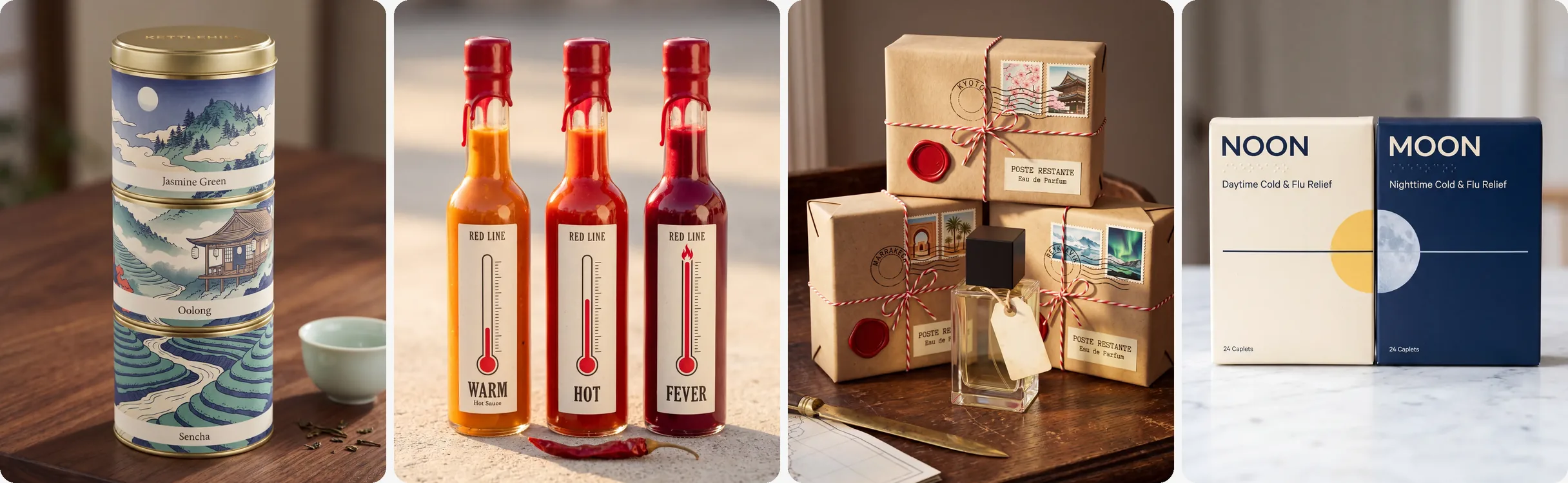
- Plan a range system early if you will add flavors, sizes or products later.
- Always approve a physical proof before full production.
The packaging design process, step by step
1. Brief and positioning
Define the audience, price point, competitors, retail channels and what the packaging must communicate in the first second.
2. Structure and dieline
Choose the format, such as a carton, tin, pouch, bottle or jar, and get the dieline from your manufacturer or printer. It defines exactly where artwork, folds and glue areas go.
3. Concepts
Explore two or three design directions. Seeing them on realistic 3D packaging, rather than as flat artwork, makes it much easier to judge them the way a customer will.
4. Refinement and range build-out
Develop the chosen direction and extend it across variants, sizes and secondary packaging such as shippers and gift sets.
5. Artwork, proofs and print
Prepare print-ready files to the printer’s specifications, check every word and barcode, and approve a physical proof before the full run.
What affects packaging design cost
- Number of SKUs and formats. Each variant and pack size needs its own artwork.
- Brand identity work. If you also need a logo, color palette and typography, that is a larger project.
- Structural complexity. Custom inserts or unusual shapes take more design and testing.
- Finishes. Foil, embossing, debossing and spot UV need precise separate artwork layers.
- Copy and regulatory content. Ingredient lists, warnings and multilingual text take time to lay out correctly.
- Visuals for launch. 3D mockups and listing images can be produced from the same design files.
Because these vary so much between projects, most designers, myself included, quote packaging projects individually after reviewing the brief.
Common packaging mistakes to avoid
- Designing without the dieline. Artwork that does not fit the real structure has to be redone.
- Ignoring the thumbnail. If the brand and product type are not readable at a small size, the pack will struggle online.
- Too many messages. A front panel that tries to say everything says nothing.
- No plan for the range. A one-off design that cannot flex to new flavors forces a redesign later.
- Misunderstanding finishes. Foils and embossing behave differently on different stocks and need correct file setup.
- Skipping the physical proof. Colors and finishes on screen never match print exactly.
- Missing required information. Labeling rules depend on the product and market, so confirm them early.

Why 3D packaging mockups matter for e-commerce
A photorealistic 3D mockup lets you approve the design before printing, pitch retailers, take pre-orders and build your Amazon listing images while production is still underway. Because the packaging already exists in 3D, the same files can produce Amazon listing images and 3D product renders for your website and ads.
You can see how I approach range systems and signature finishes in my packaging projects: Ten Brands, Ten Stories and Nine Range Systems.
Frequently Asked Questions
How long does packaging design take?
It depends on the number of SKUs, the amount of brand work and feedback rounds, plus printer lead times. Building in time for proofs avoids rushed decisions.
Do I need a dieline before design starts?
It is ideal. If you do not have one yet, design can start from dimensions and be adapted to the final dieline later.
Should I design my brand identity and packaging together?
For new brands, yes. Designing them together makes sure the identity works on pack, on screen and across a growing range.
Final Thoughts
Great packaging is planned, not just decorated. Start from the structure, design for both shelf and screen, plan the range and proof before you print. If you are preparing a launch, see my packaging and brand design service.
Want to see your pack before you print? Read my guide to 3D packaging mockups.

Abdenour is the founder and creative director of Amplify SSV, where he creates 3D product renders, Amazon listing images, product animation and packaging design for consumer brands. More about Abdenour.


