


Supplement Amazon Listing Images: The 7-Image Gallery That Builds Trust
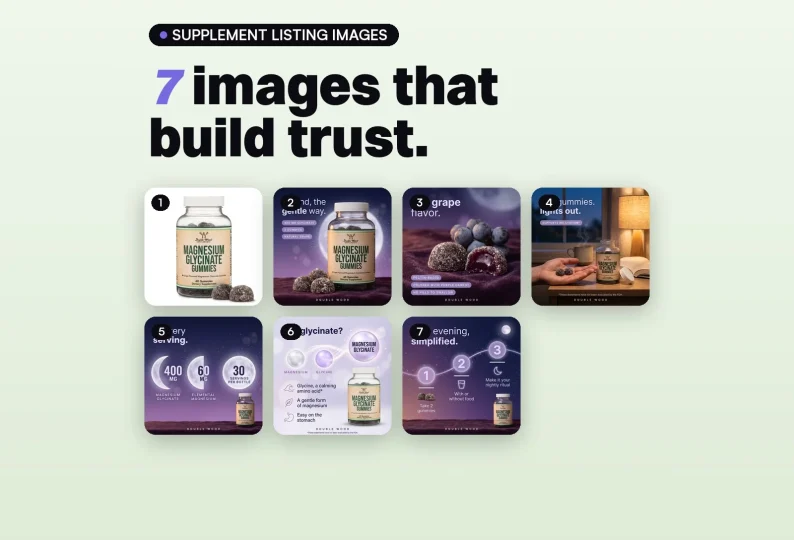
Supplement shoppers are some of the most careful buyers on Amazon. They zoom into the label, compare doses, check the form of each ingredient and look for signs that a brand can be trusted with something they’ll swallow every day. Your images have to answer all of that, look premium, and stay inside strict claim rules. Here’s the 7-image gallery I use for supplement brands, shown with a concept I designed for a magnesium gummy.
Key takeaways
- Build the gallery around trust: what’s in every serving, why this form, how to take it, and proof of quality.
- Every number on your images must match the Supplement Facts panel exactly.
- Avoid disease claims (treat, cure, prevent); keep wording to what your team has approved.
- Show the format up close: gummies, capsules or powder and a real serving.
- Only show certifications and seals you can document.
Plan yours: my free listing image planner has a supplements plan you can copy.
Why supplement listings need different images
With most products, shoppers ask “what does it do?”. With supplements they also ask “is this safe, is it the right dose, and can I trust this brand?”. That’s why supplement galleries lean on clarity and proof more than mood. Amazon also has detailed policies for dietary supplements, and listings are expected to match the product’s label. Images that look generic or make loose claims don’t just underperform; they can create compliance problems.

The 7-image supplement gallery
- Main image: the bottle or pouch on pure white, label readable, with a few gummies or capsules beside it to show the format.
- Hero benefit: one compliant benefit line and the key facts (dose, serving, flavor) as small chips.
- Label and what’s in every serving: a real photo of your Supplement Facts panel (plus the back and sides), cleaned up but never altered, with the numbers buyers compare called out in large type, copied exactly from the panel.
- Ingredient story: why this form or blend, explained simply with visuals instead of jargon.
- How to take it: dose and timing in a real moment, like two gummies in an evening routine.
- Quality and trust: testing, facility and free-from claims you can document.
- Lifestyle or routine: the product in the setting where it’s used, with the bottle at true size.
Add the FDA disclaimer wherever a slide repeats a structure/function claim from your US label, as in the examples above.
Where renders fit: Amazon’s 2026 supplement policy, as reported by seller and regulatory sources, asks for the full real label on all sides of the pack, and says images submitted for compliance review must be authentic and not computer or AI generated. So I use real, retouched photos for the label and all-sides slides, and 3D renders for the hero, benefits, ingredients, routine, A+ Content and ads. Checked on 22 November 2026 against 2026 trade coverage of Amazon’s dietary supplement policy. Amazon updates it often, so confirm the current wording on the Dietary Supplements policy page in Seller Central before you upload.
Brand visuals beyond the listing
The same 3D product can carry your brand everywhere else: your website, ads, social and retail decks. Clean studio scenes make a science-led brand feel credible, fresh ingredient sets make a greens powder feel natural, and indulgent pours make a collagen drink feel like a treat. Building all of it from one accurate model keeps every channel consistent, and new flavors reuse the same setup.

Claims to avoid on supplement images
- Disease claims: words like treat, cure, prevent or diagnose, or naming a disease, aren’t allowed for supplements.
- Unproven “best” claims: “#1”, “best on Amazon” or “doctor recommended” need proof you can show.
- Seals you don’t hold: only show certifications, testing badges and “made in” claims you can document.
- Mismatched numbers: doses, servings and ingredients must match the Supplement Facts panel exactly.
- Dramatic before/after body results: they invite scrutiny and rarely build trust.
Claims are your brand’s responsibility, so have your wording checked against Amazon’s current policy and by a regulatory adviser. I only place claims you’ve approved.
Show the format up close
Shoppers want to see what they’ll actually take. Macro shots of a sugared gummy, a glossy softgel or a scoop of powder answer “what’s it like?” instantly, and a serving shot (two gummies in a palm, one scoop next to a glass) answers “how much?”. In 3D these textures can be art-directed to match your real product’s color, shine and size exactly, which is hard to get consistently in a photo studio.
What supplement listing images cost
With me, a label-accurate Amazon main image is $190 and a full supplement listing set (main image + 6 gallery images like the ones above) starts at $690. Extra flavors or sizes from the same setup are $90 each, and a 3D model starts at $100 for simple bottles. See more on my supplement product visuals page, or send me your listing for a free audit within 24 hours. No calls needed.
Frequently Asked Questions
Should I show the Supplement Facts panel on Amazon images?
Yes. Amazon’s 2026 supplement policy expects the full label, including the complete Supplement Facts panel, to be visible in your images. Use a real photo of the panel for that slide (not a render), and make every number elsewhere in the gallery match it exactly.
Can I say my supplement supports sleep or relaxation?
Structure/function wording like “supports relaxation” is common on US supplement labels, alongside the FDA disclaimer. Disease claims like “treats insomnia” aren’t allowed. Have your exact wording checked against Amazon’s policy and by a regulatory adviser.
Do supplement images need the FDA disclaimer?
If an image repeats a structure/function claim from your US label, adding the same FDA disclaimer on that slide keeps it consistent with your packaging.
How much does a supplement Amazon listing set cost?
With me, a main image is $190 and a full listing set with 6 gallery images starts at $690, with extra flavors or sizes at $90 each and a fixed price before anything starts.
Final Thoughts
Great supplement listing images earn trust before the first capsule: a clean main image, one honest benefit, the numbers from your label, a simple ingredient story, a clear way to take it and real proof of quality. Keep every claim approved and every number exact. Plan your gallery with the free listing image planner, see examples on my supplement product visuals page, and when you want the full set designed, I’d love to help.
Want ideas beyond the listing? See my 12 supplement product photography ideas.

Abdenour is the founder and creative director of Amplify SSV, where he creates 3D product renders, Amazon listing images, product animation and packaging design for consumer brands. More about Abdenour.


