


Amazon Images That Convert: The Psychology Behind High-Performing Listings

The Product Is Not What Customers See First
A founder sees months of research, manufacturing decisions, testing, and investment behind a product. The customer does not. The customer sees a screen.
That difference is where ecommerce success or failure often begins.
On Amazon, a customer cannot touch the materials, feel the packaging, test the performance, or speak with a salesperson. The visual experience becomes the substitute for physical interaction. Images become the first explanation of quality, trust, and value.
This is why product imagery should never be treated as decoration. The strongest brands understand that images are part of the sales strategy. They are responsible for attracting attention, explaining benefits, reducing uncertainty, and helping customers imagine ownership.
When a shopper looks at a listing, they are silently asking questions. Is this product reliable? Does it look premium? Will it solve my problem? Why should I choose this option instead of the ten similar products beside it?
A strong visual system answers those questions before the customer leaves the page.
The Psychology Behind Buying Decisions
Online purchasing decisions happen quickly. Customers scan before they study. They form impressions before they read every detail.
Visual quality influences perception because people naturally use appearance as a shortcut for judging value. A carefully designed image communicates attention to detail. A poorly presented image can create doubt even when the product itself is excellent.
This is especially important in competitive categories where many products offer similar features. When every competitor claims quality, durability, and innovation, presentation becomes a major differentiator.
Premium visuals do not trick customers into buying. They make the real value easier to understand.
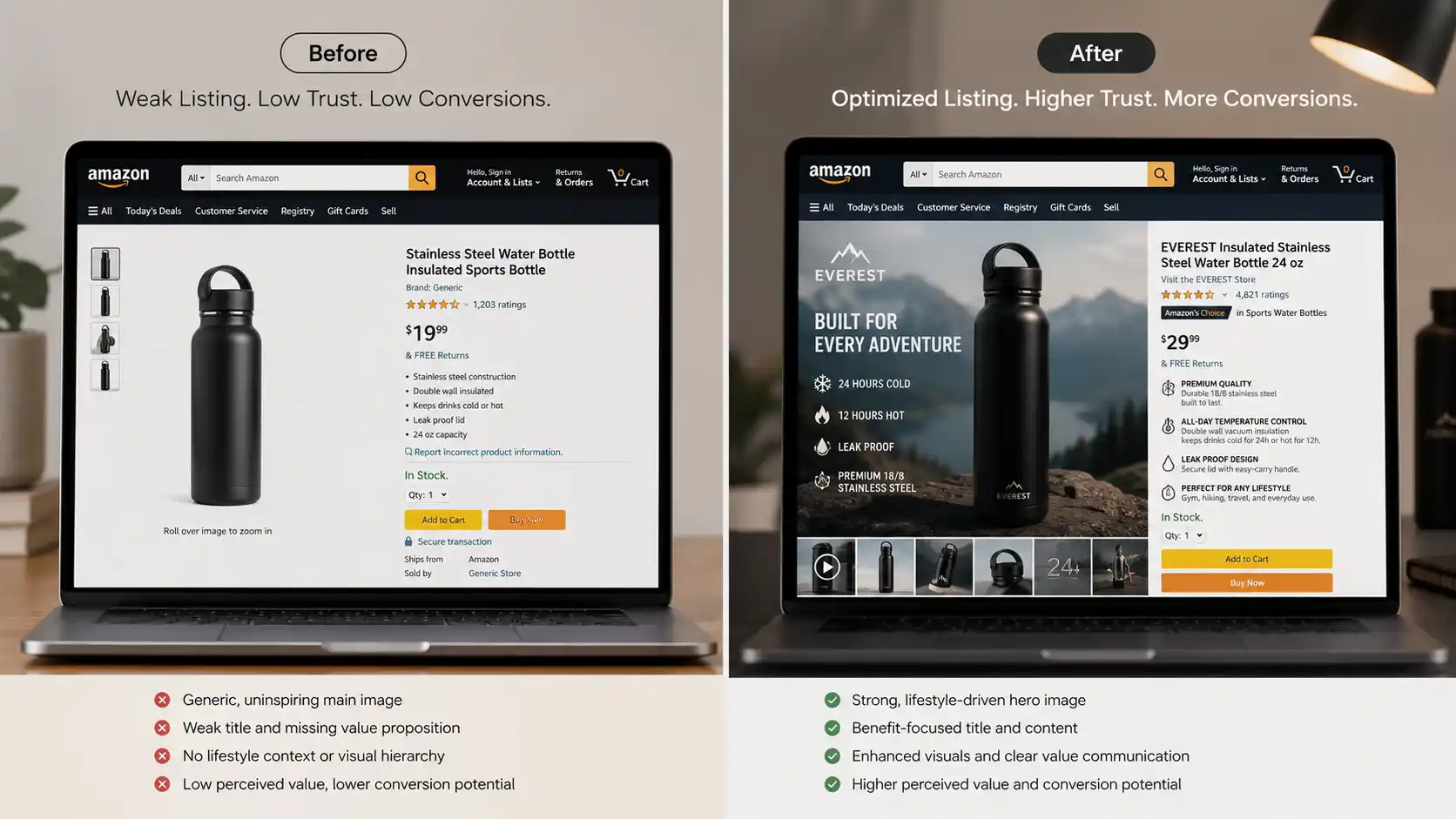
The Hero Image: Winning The First Click
The main image has one critical responsibility: earn attention.
It is often the first thing customers see in search results, competing directly against dozens of alternatives. Amazon requires the main image to follow strict guidelines, including a clean background and clear product presentation. Within those rules, brands still have significant opportunities to communicate quality through composition, scale, clarity, and realism. citeturn0search0turn0search3
A strong hero image immediately communicates what the product is. It avoids confusion. It makes the product easy to understand. It creates confidence that the customer is clicking on something professional.
Many brands underestimate this moment. They think the hero image only needs to be accurate. Accuracy is necessary, but competitive marketplaces require more: clarity, impact, and presentation quality.
Building A Complete Visual Journey
A high-performing Amazon listing is not a collection of random images. It is a carefully planned customer journey.
The first image introduces the product. The following images should continue the conversation.
Lifestyle visuals show how the product fits into someone’s life. Feature graphics explain advantages quickly. Comparison images remove doubts. Detail images prove quality.
The best listings understand that every customer has objections. Good visuals answer those objections before they become reasons not to buy.
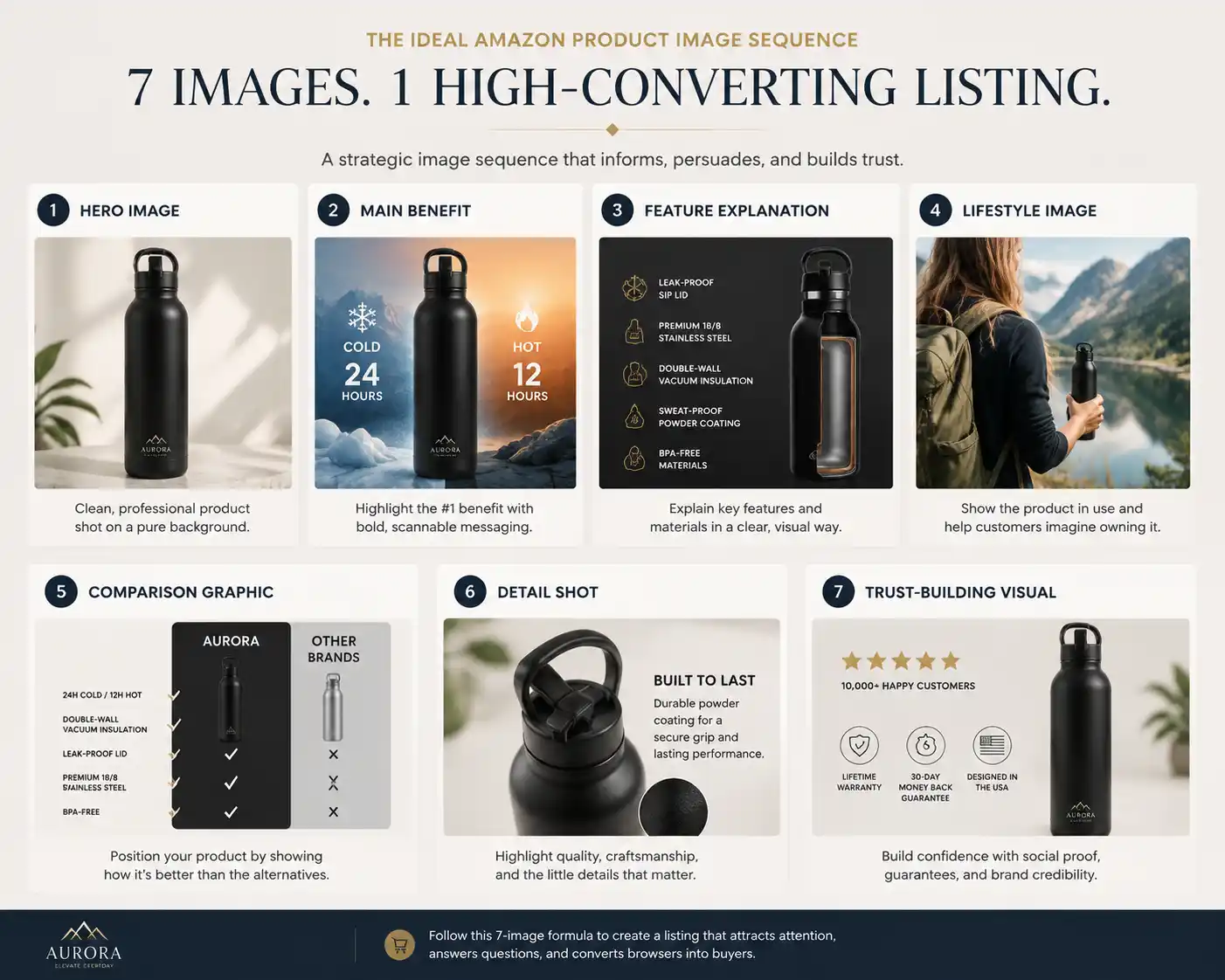
From Features To Benefits
One of the biggest mistakes brands make is showing features without explaining why they matter.
Customers rarely buy technical specifications alone. They buy the improvement those specifications create.
A powerful image translates information into meaning. Instead of only showing a material, show why that material matters. Instead of only displaying a function, show the problem it solves.
The goal is not simply to make customers understand the product. The goal is to make them understand why it matters.
Why Premium Visuals Create Premium Perception
People naturally associate presentation quality with product quality. This does not mean appearance replaces substance. It means presentation helps customers recognise substance.
A premium product with weak visuals can appear average. A strong visual system allows customers to see the quality that already exists.
This is why leading brands invest heavily in creative direction. They understand that every image contributes to the overall perception of the company.
How 3D Visualization Changes Amazon Content Creation
Traditional photography is powerful, but 3D visualization gives brands additional flexibility. Products can be placed in controlled environments, shown from different angles, adapted into advertising scenes, and updated without repeating an entire production process.
For brands managing multiple marketplaces and campaigns, visual assets become long-term investments.
A single digital product model can become a foundation for ecommerce images, advertisements, animations, and future campaigns.
Final Thoughts
The best Amazon listings do not simply display products. They create confidence.
In a marketplace where customers cannot physically experience what they are buying, visuals become the bridge between curiosity and purchase.
Brands that understand this do not ask only, “Does our product image look good?”
They ask, “Does our visual experience help customers believe in our product?”
That is the difference between an image that exists and an image that converts.
Amplify SSV helps brands transform products into premium visual experiences through strategic ecommerce imagery, 3D visualization, and creative direction.
