


Skincare Product Photography Ideas (With Lighting Setups and a Slot Plan)
Skincare is bought with the eyes and the fingertips. Shoppers can’t feel the cream or smell the serum, so your images have to do it for them: show the texture, hint at the ingredients, and make the product feel like part of a routine they want. Here are 12 skincare product photography ideas I use, each shown with a concept visual I created, from water and ice to bathroom shelves and beach bags.
Key takeaways
- Match the scene to the promise: water and ice for hydration, fruit for actives, warm light for nourishing oils.
- Always include a texture shot. It’s the closest thing to a free sample.
- Show the product in hand and in a real routine, so shoppers understand size and use.
- Keep the label sharp and readable in every image.
- Plan a set that mixes hero, texture and lifestyle images in one consistent look.
Selling on Amazon? See how to plan a full gallery with my free listing image planner.
Water, ice and texture: ideas 1 to 6
- Water ripple: the jar on a stone in still water says calm, clean and hydrating without a single word (CeraVe).
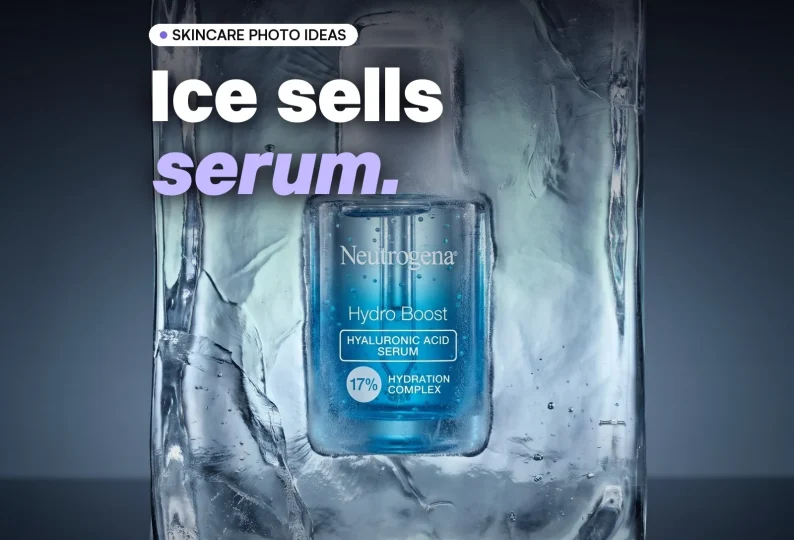
- Ice and cold: a serum frozen in a clear ice block makes “hydration” and “fresh” feel physical (Neutrogena Hydro Boost).
- Splash: the bottle plunging into water adds energy for ads and social.
- Texture close-up: a swirl of gel or a swipe of cream shows exactly how the formula feels.
- Ingredient story: put the hero ingredient in the frame, like a watermelon serum resting on fresh fruit (Glow Recipe).
- Golden drop: a single drop falling from the dropper turns an oil or vitamin C serum into something precious (Mad Hippie).

Why texture and ingredient shots sell skincare
A skincare product is really the formula inside the pack, and texture is the formula made visible. Is it a light gel, a rich balm, a watery essence? A good texture shot answers in a second and sets expectations, which also means fewer surprised customers and fewer returns. Ingredient scenes do the same for the claims: fruit, botanicals or water tell shoppers what the product is built around, as long as they match what’s really in the formula.
Routine and lifestyle: ideas 7 to 12
- In hand: a hand holding the jar is the fastest way to show size.
- Bathroom routine: the product by the sink with soap and towels, where it really lives (eos).
- Outdoors: sunscreen on sand by the waves sells the moment it’s made for (Supergoop).
- In the bag: tubes tumbling out of a gym or beach bag show it’s easy to carry.
- Flat lay: the product among everyday things like a mirror, scrunchies and earbuds, made for social.
- Bold color set: a playful set in brand colors that stops the scroll in ads.

How to plan a skincare image set
You don’t need all 12. For most products, 6 to 8 images cover it:
- A clean hero on white or a soft brand color, label sharp.
- One or two concept shots that match your main promise (water, ice, fruit, glow).
- A texture shot of the formula.
- An in-hand shot for scale.
- Two lifestyle shots: the routine at home and the product on the go.
Keep the same palette and light across all of them, so they look like one brand on your store, Amazon and social.
Setup notes for all 12 ideas
Here is how I would set up each of the 12 skincare ideas: the listing slot it does the best job in, the light and angle that make it work (in a studio or in 3D), and the mistake I see most often. Use it as a brief for a photographer, or send it to me and I’ll build the shots in 3D.
| Idea | Best slot | Light and angle | Mistake to avoid |
|---|---|---|---|
| Water ripple | Gallery or A+ banner | Soft top light, low camera across the water | Ripples so busy the jar loses focus |
| Ice and cold | Gallery (hydration claim) | Backlight through the ice, black card behind for contrast | Ice that hides the label |
| Splash | Ads and social | Two rim strips, fast shutter or simulated in 3D | Droplets on the label text |
| Texture close-up | Gallery 2 or 3 | Grazing side light to show thickness | Colour or gloss that doesn’t match the formula |
| Ingredient story | Gallery (key active) | Soft key at 45°, ingredients slightly out of focus | Fruit or botanicals that aren’t in the formula |
| Golden drop | Ads or A+ | Backlight so the oil glows amber | A drop colour that doesn’t match the oil |
| In hand | Gallery (size) | Window light from the side, hand only, no face | A wide lens that makes the jar look bigger |
| Bathroom routine | Lifestyle slot | Soft daylight from the side, warm fill | A cluttered counter that competes with the product |
| Outdoors | Lifestyle or ads (sun care) | Hard sun as rim, reflector in front | Glare on the tube hiding the SPF |
| In the bag | Gallery (portability) | Overhead soft light, top-down camera | Too many props, so size is unclear |
| Flat lay | Social and A+ | Large overhead softbox, bounce on one side | Everything the same size, no hero |
| Bold color set | Ads and social | Hard key for crisp shadows on a coloured sweep | A colour that clashes with the pack |
Two lighting setups I use for skincare
Top-down diagrams: the product sits in the middle and the camera at the bottom. The same setups work in a studio and in 3D, where I can place every light exactly.
Two strips behind the bottle outline the glass and make the formula glow. A small white card under the lens lifts the label without flattening it.
One big soft source from the side, like a bathroom window, with a bounce on the far side. It reads as real life, not a studio.
Photoshoot or 3D for skincare?
Water, ice, drops and splashes are some of the hardest things to shoot: they need special equipment, many takes and lots of retouching, and labels on glossy jars reflect everything in the studio. In 3D, the same scenes can be art-directed exactly, the label stays perfectly sharp, and new sizes or shades reuse the same setup. Lifestyle scenes are easier to stage too, with no location or props to source. Many brands mix both: 3D for hero and concept images, photos for anything with people.
What skincare product visuals cost
With me, a label-accurate main image is $190, a 3D launch set (3 hero renders and 2 lifestyle scenes) starts at $590, and a full Amazon listing set starts at $690. Extra sizes or shades from the same setup are $90 each. See more examples on my skincare product visuals page, get your number with the instant estimator, or ask for a fixed quote within 24 hours. No calls needed.
Frequently Asked Questions
What are good skincare product photography ideas?
Water ripples, ice, splashes, texture close-ups, hero ingredients, falling drops, in-hand shots, bathroom routines, outdoor scenes, bags, flat lays and bold color sets. Pick the ones that match your product’s main promise.
How many images does a skincare product need?
Usually 6 to 8: a clean hero, one or two concept shots, a texture shot, an in-hand shot for scale and two lifestyle images, all in the same visual style.
How do you photograph skincare texture?
Show a swatch, swirl or drop of the formula close up, in soft light that reveals its sheen and thickness. In 3D, the texture can be matched to your real formula’s color, gloss and consistency.
Can 3D renders work for skincare brands?
Yes. 3D is especially good for glossy packaging, water, ice and drops, and for keeping a whole range consistent. Lifestyle scenes can be created in 3D as well, without a location shoot.
Final Thoughts
The best skincare product photography makes people want to touch the screen: a scene that matches the promise, a texture they can almost feel, and a routine they recognize. Pick the ideas that fit your product, keep one consistent look, and make sure the label is sharp in every image. When you want the whole set created from one accurate 3D model, I’d love to help.
Selling haircare too? See my 12 haircare product photography ideas.

Abdenour is the founder and creative director of Amplify SSV, where he creates 3D product renders, Amazon listing images, product animation and packaging design for consumer brands. More about Abdenour.


